Traveling with a baby can be exciting, but it can also feel completely different from traveling before becoming a parent.
A short family trip that once required a small suitcase may suddenly involve diapers, wipes, feeding supplies, extra clothes, bottles, medications, toys, sleep essentials, and several items you never thought you would need.
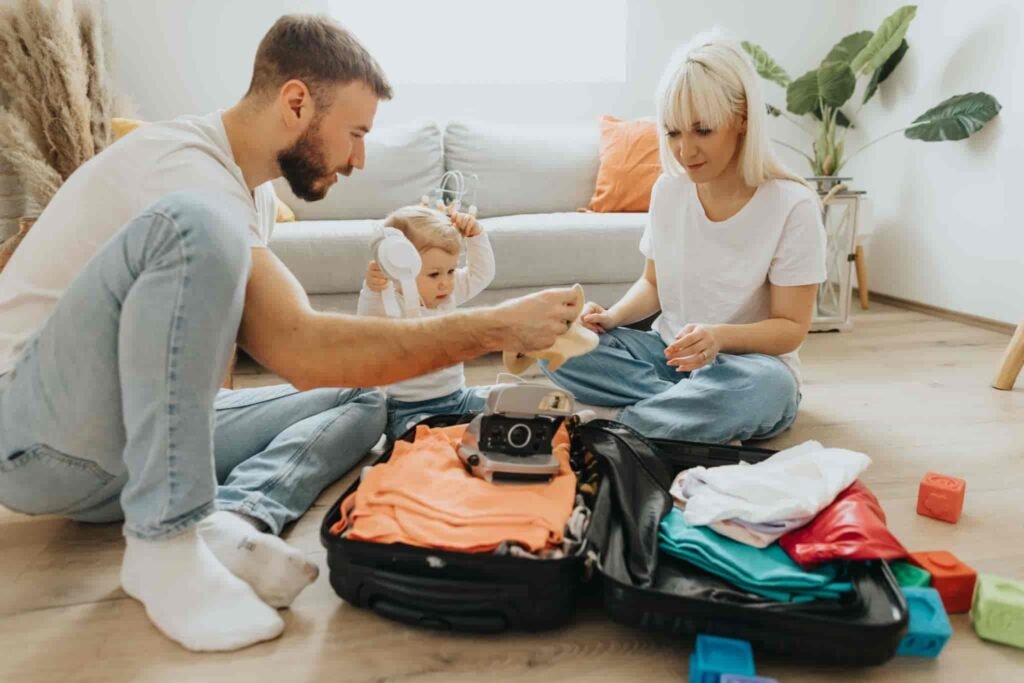
The good news is that you do not need to pack your entire home.
The secret to easier family travel is choosing the right baby travel essentials and organizing them so the things you need most are always within reach.
Whether you’re taking a weekend road trip, flying to another city, visiting relatives, or going on your first family vacation, a little preparation can make the journey much more manageable.
This guide covers the most useful travel essentials for babies and toddlers, including what to pack for feeding, diaper changes, sleep, clothing, entertainment, health, safety, flights, and road trips.
Baby Travel Essentials Checklist at a Glance
Before getting into the details, here is a quick checklist of the most important items to consider:
- Diapers
- Baby wipes
- Changing mat
- Diaper cream
- Disposable diaper bags
- Extra baby clothes
- Feeding supplies
- Bottles or nursing supplies
- Baby food and snacks when age-appropriate
- Bibs
- Burp cloths
- Water or milk supplies as appropriate
- Pacifier if your baby uses one
- Comfort item
- Age-appropriate car seat
- Stroller or baby carrier
- Baby-safe sunscreen where appropriate
- Sun hat
- Basic first-aid supplies
- Thermometer
- Necessary medications
- Hand sanitizer
- Tissues
- Wet/dry bags
- Portable changing supplies
- Travel crib or other safe sleep solution when needed
- Favorite small toys or books
- Important documents
- Travel insurance information
- Extra supplies for unexpected delays
You probably won’t need every item on every trip. The right packing list depends on your baby’s age, feeding method, destination, length of travel, weather, and transportation.
1. Start With a Baby Travel Packing Strategy
One of the biggest mistakes parents make is packing everything together.
Instead, divide your baby’s belongings into three categories:
Bag 1: Immediate-access travel bag
This is the bag that stays with you during the journey.
It should contain the things you might need within minutes:
- Diapers
- Wipes
- Changing mat
- One or two changes of clothes
- Feeding supplies
- Burp cloth
- Pacifier
- Small toy
- Snacks for older babies or toddlers
- Water or milk as appropriate
- Tissues
- Hand sanitizer
- Plastic or wet bags
- Basic comfort items
Bag 2: Main luggage
Keep less frequently needed items here:
- Extra clothing
- Additional diapers
- Shoes
- Toiletries
- Extra feeding equipment
- Sleepwear
- Larger toys
- Spare supplies
Bag 3: Emergency or backup supplies
Keep backup items somewhere accessible but separate from the everyday bag.
For example:
- Extra diapers
- Extra formula or feeding supplies
- Additional clothes
- Spare pacifier
- Important medications
- Emergency documents
This system prevents one common travel disaster: having everything packed but not being able to find the one item your baby suddenly needs.
Travel can sometimes disrupt a toddler’s normal sleep schedule, especially when staying in a new place. Keeping familiar bedtime habits can make the transition easier. If your toddler already struggles with sleep, you may also find our guide on Why Is My Toddler Having More Tantrums Lately? 10 Reasons and What Parents Can Do helpful for building a calmer bedtime routine.
2. Diapering Essentials
If your baby is still using diapers, diaper supplies should be one of the first things you organize.
Pack more diapers than you expect to use
Travel can involve unexpected delays.
Flights may be delayed. Traffic can become heavy. A road trip may take longer than planned. Your hotel may not have the brand or size you normally use.
Pack enough for the journey plus a reasonable backup.
For longer trips, you can decide whether to carry the full supply or buy additional diapers at your destination.
Essential diaper-changing items
Your travel diaper kit can include:
- Diapers
- Unscented or your usual baby wipes
- Portable changing mat
- Diaper cream
- Disposable diaper bags
- Hand sanitizer
- Tissues
- A small towel or muslin cloth
- One or two spare outfits
A portable changing mat is particularly useful because you may need to change your baby in an airport, roadside rest area, hotel room, or other unfamiliar location.
Keep several diaper changes at the top of your travel bag instead of burying them underneath clothing.
3. Extra Baby Clothes Are a Must
Babies have a remarkable ability to turn a clean outfit into a laundry problem at exactly the wrong moment.
Spit-up, food spills, diaper leaks, and unexpected messes are all reasons to carry extra clothing.
For the journey itself, consider packing:
- At least one complete spare outfit
- Extra socks
- Comfortable sleepwear
- A light jacket or sweater when appropriate
- Sun hat for sunny destinations
- Weather-appropriate layers
For longer journeys, add additional changes based on the baby’s age and how easily you can access laundry facilities.
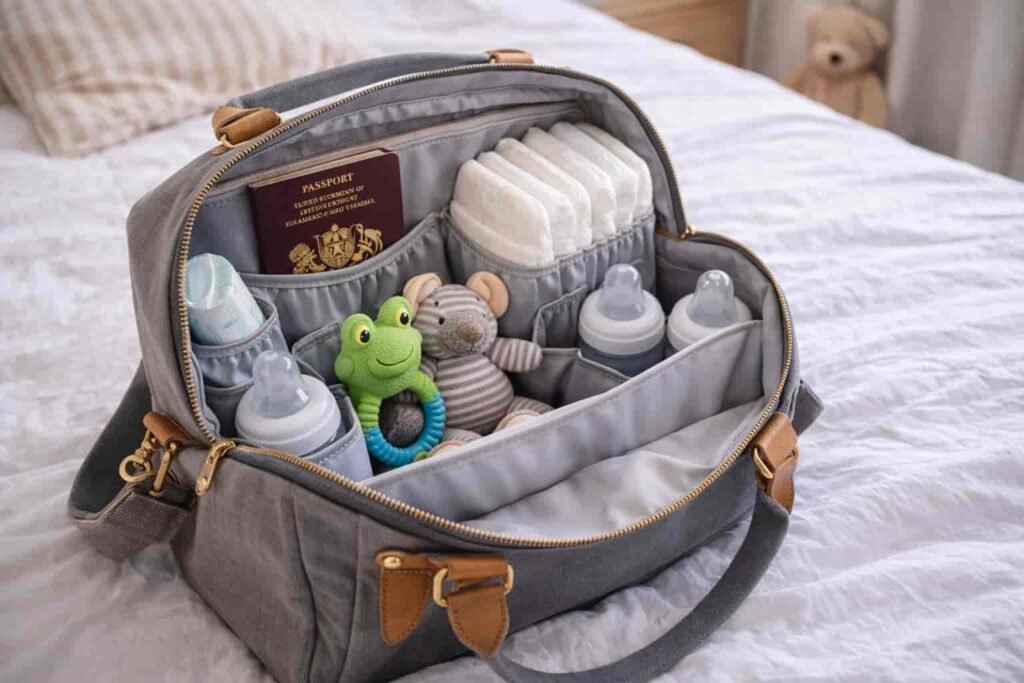
A useful trick is to place each complete outfit together in a small packing pouch. Instead of searching through a suitcase for a shirt, trousers, socks, and vest, you can simply grab one complete set.
4. Feeding Essentials for Traveling With a Baby
Feeding is one area where preparation can make a huge difference.
Your exact packing list depends on whether your baby is breastfed, formula-fed, eating solids, or using a combination.
If You Are Breastfeeding
You may need very little equipment.
Consider:
- Nursing cover if you use one
- Burp cloth
- Breast pump if required
- Pump parts
- Milk storage containers or bags
- Cooler bag and cold packs when needed
- Hand-cleaning supplies
- Backup pumping method if appropriate
The CDC recommends planning ahead for expressing and storing breast milk while traveling. If you’re traveling with expressed milk, check the rules for your destination and transport provider before departure.
During air travel, breastfeeding or feeding during takeoff and landing may also help babies with ear discomfort caused by pressure changes.
If Your Baby Uses Formula
Depending on the length and type of trip, consider:
- Formula
- Clean bottles
- Bottle nipples
- Measuring supplies
- Safe water as required
- Bottle-cleaning supplies
- Insulated bottle bag or cooler when appropriate
Do not assume that your destination will have the exact formula your baby normally uses.
If you are traveling internationally, check the rules regarding formula, water, and food before departure.
If Your Baby Eats Solid Food
Pack familiar foods whenever practical.
Depending on your baby’s age and normal diet, this might include:
- Baby food
- Soft foods
- Age-appropriate snacks
- Feeding spoon
- Bib
- Small container
- Wipes
- Water cup
Avoid introducing several new foods immediately before or during a major trip if you can avoid it. Familiar foods can make meals more predictable.
5. Baby Food and Milk When Flying
Parents often worry about airport security rules when carrying milk or baby food.
The important point is that rules differ between countries and airports.
In the United States, TSA permits breast milk, formula, toddler drinks, and baby/toddler food—including puree pouches—in reasonable quantities exceeding the standard 100 ml liquid limit. Parents should tell the TSA officer at the beginning of screening and remove these items for separate inspection.
The UK also allows baby food and baby milk in hand luggage, although airport-specific procedures can apply.
Canada’s CATSA likewise allows certain baby foods, milk, liquid formula, water, juice, and cooling packs for infants under two in quantities above 100 ml.
Always check the current rules for your departure airport, destination, and airline before traveling, because security procedures can change.
A simple travel tip: keep feeding supplies together and easily accessible rather than placing them at the bottom of your carry-on.
6. The Right Car Seat Is One of the Most Important Baby Travel Essentials
If you are traveling by car, the car seat should be treated as a safety item—not simply another piece of luggage.
Children should be properly restrained according to their age, height, weight, and the limits of the specific seat. The CDC and American Academy of Pediatrics recommend appropriate child restraints and emphasize that children should be properly secured during vehicle travel.
Before traveling:
- Check that the seat is appropriate for your child.
- Make sure it is installed correctly.
- Follow the manufacturer’s instructions.
- Check the seat for damage.
- Know how to adjust the harness correctly.
- Avoid using an unfamiliar seat without checking its condition and compatibility.
If you are renting a car, do not automatically assume the rental company will have the exact seat you need in good condition. The CDC notes that families may need to bring their own car seat because appropriate seats may be limited at some destinations.
7. Stroller or Baby Carrier?
You don’t necessarily need both.
The best choice depends on your destination.
A stroller may be useful when:
- You’re spending long periods walking.
- Your baby sleeps comfortably in the stroller.
- You need storage space.
- You’re visiting large attractions.
- Your child is still young or tires easily.
A baby carrier may be better when:
- You’re navigating crowded places.
- You’re using stairs frequently.
- You’re walking on uneven surfaces.
- You need both hands available.
- You’re moving through airports.
For some trips, taking both can make sense. For others, a lightweight stroller or carrier is enough.
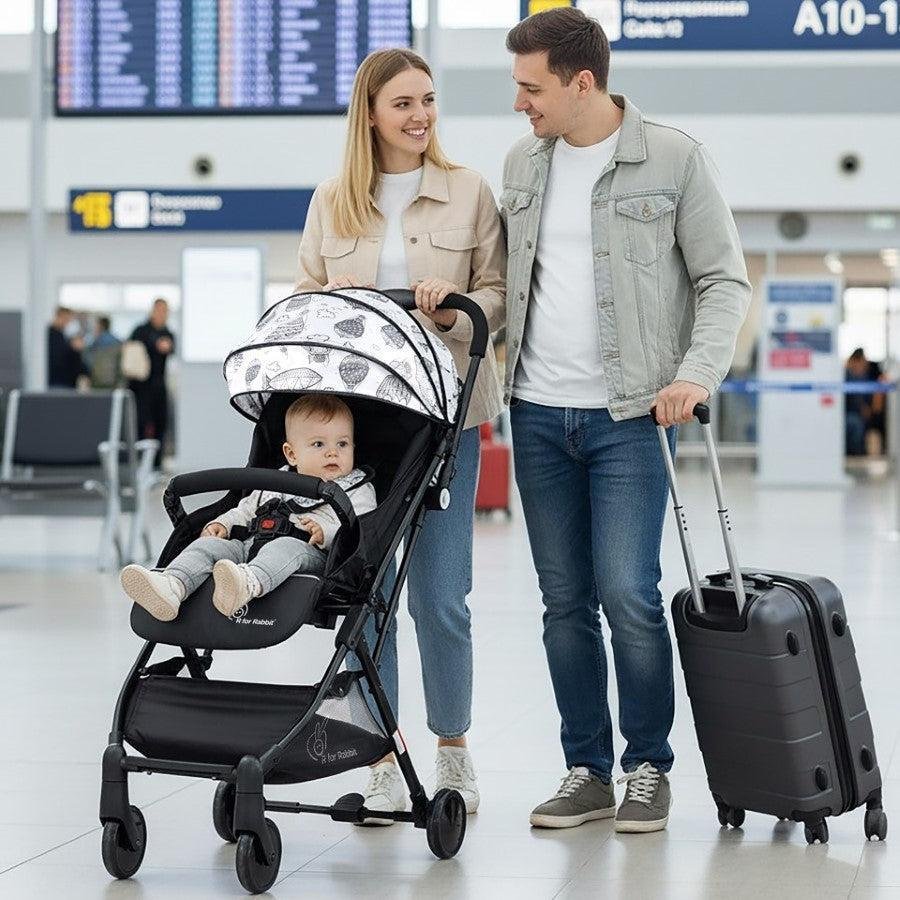
Before traveling, practise using your carrier and folding your stroller. You don’t want the first attempt to happen at a busy airport.
8. Baby Sleep Essentials
Sleep can be one of the biggest challenges during family travel.
A new room, unfamiliar sounds, different time zones, and changes to the normal schedule can make sleep harder.
Bring a few familiar items when practical:
- Familiar sleepwear
- Sleep sack if your baby normally uses one
- Familiar comfort item when age-appropriate
- Portable white-noise machine if you normally use one
- Familiar bedtime book
- Portable crib or travel sleep space if needed
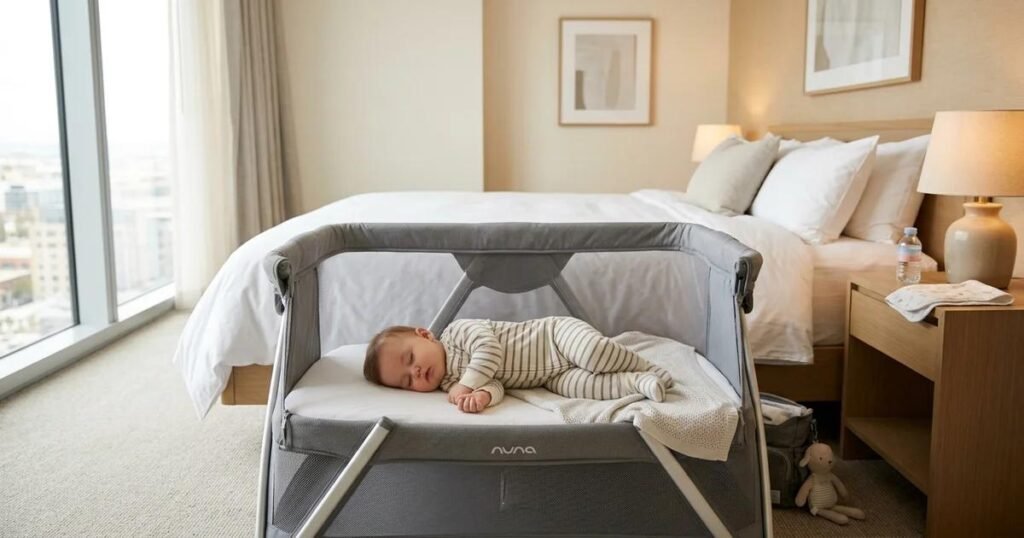
The CDC recommends that caregivers plan for a safe infant sleep environment during travel because accommodation standards may vary.
One important point: a car seat is designed for travel safety, not as a replacement for a safe sleep space once you arrive. The AAP advises moving a sleeping baby from a car seat to a safe sleep surface after arriving rather than using the car seat as the baby’s routine sleep space.
9. Baby Health and First-Aid Travel Kit
A small health kit can save you from searching for a pharmacy in an unfamiliar location.
Depending on your baby’s needs, consider:
- Digital thermometer
- Any prescribed medications
- Medicine dosing device
- Saline drops if recommended for your child
- Basic first-aid supplies
- Plasters
- Hand sanitizer
- Baby-safe insect protection when appropriate
- Sunscreen appropriate for your child’s age
- Any medical documents you may need
Do not pack medications simply because another parent recommends them online. Bring medicines your child normally uses or that your healthcare professional has recommended.
Keep essential medicines in your carry-on rather than checked luggage when flying.
10. Sun and Weather Protection
Your destination should determine what weather-related baby essentials you bring.
For hot destinations:
Consider:
- Lightweight breathable clothing
- Sun hat
- Shade for the stroller
- Water or feeding supplies appropriate for your baby’s age
- Sun protection appropriate for your child’s age
- Cooling supplies where appropriate
Never leave a baby or child alone in a parked vehicle. Cars can become dangerously hot very quickly.
For cold destinations:
Pack:
- Warm layers
- Hat
- Socks
- Weather-appropriate outerwear
- Extra blankets or clothing as appropriate
Avoid over-bundling a baby in a car seat. Follow the car-seat manufacturer’s guidance regarding clothing and harness fit.
11. Baby Entertainment for Long Journeys
You do not need a suitcase full of toys.
Choose a few small, familiar items.
Good options can include:
- Board books
- Soft toy
- Teething toy
- Stacking cups
- Finger puppets
- Simple sensory toys
- Familiar comfort item
- Small toddler activity book
For older babies and toddlers, rotate toys rather than giving everything at once.
A toy that hasn’t been seen for several days can suddenly become much more interesting.
For screen time, follow your family’s normal approach rather than relying on a screen for the entire journey.
12. Wet and Dry Bags Are Surprisingly Useful
A few simple waterproof bags can make travel considerably easier.
Use them for:
- Wet clothing
- Dirty bibs
- Used towels
- Soiled items
- Opened food containers
- Diaper-related waste where appropriate
Keep several reusable or disposable bags inside your main travel bag.
They’re inexpensive, lightweight, and useful in situations you didn’t anticipate.
13. Baby Travel Essentials for a Road Trip
Road trips give families more flexibility, but they require a different packing strategy.
Keep a dedicated backseat baby bag containing:
- Diapers
- Wipes
- Changing mat
- Spare clothes
- Feeding supplies
- Snacks
- Water or milk as appropriate
- Burp cloth
- Pacifier
- Small toys
- Tissues
- Hand sanitizer
- Thermometer
Plan regular stops.
The AAP recommends taking regular breaks during longer car journeys so babies can be removed from their car seats, fed, changed, and cared for appropriately.
Never breastfeed or feed a baby while the vehicle is moving. Pull over somewhere safe.
And never leave a baby or child unattended in a parked vehicle, even for a short period.
14. Baby Airplane Essentials
Flying with a baby requires a slightly different strategy.
Your carry-on should contain everything you might reasonably need during the flight.
Consider packing:
- Diapers
- Wipes
- Changing mat
- Two changes of clothes
- Feeding supplies
- Burp cloth
- Pacifier
- Comfort item
- Small toys
- Baby food if appropriate
- Necessary medications
- Plastic or wet bags
- Important documents
Do not put all your baby’s essential supplies into checked luggage.
A delayed or lost suitcase is inconvenient for an adult. It can become much more difficult when it contains your baby’s diapers, feeding supplies, and clothing.
15. Prepare for Ear Pressure During Takeoff and Landing
Some babies and young children become uncomfortable during changes in cabin pressure.
Feeding, breastfeeding, or allowing an older child to swallow can help with pressure equalization. The CDC specifically notes that breastfeeding during takeoff and landing can help infants with ear discomfort.
Keep feeding supplies easily accessible rather than packed deep inside your luggage.
If your baby has a medical condition or you are concerned about flying because of an ear infection or another health issue, consult your child’s healthcare professional before traveling.
16. Documents and Important Information
Traveling with a baby means carrying more documentation than you might expect.
Depending on your destination, consider having:
- Passport
- Visa documents if required
- Health or vaccination records when appropriate
- Travel insurance information
- Prescription information
- Emergency contact details
- Airline booking information
- Hotel or accommodation details
- Consent documentation when required for a child traveling with one parent
For international travel, check the entry requirements for your destination well before departure.
The CDC also recommends that children carry identifying information and notes that parents traveling alone with children may need relevant custody documentation or a notarized permission letter depending on the circumstances.
17. What Should You NOT Pack?
One of the easiest ways to make family travel stressful is to overpack.
You probably don’t need:
- Every toy your child owns
- Multiple bulky blankets
- Large quantities of toiletries
- Too many pairs of shoes
- Full-size bottles of everything
- Duplicate equipment unless necessary
- Toys your child has never seen before
- Large amounts of food that can easily be purchased at your destination
Instead, focus on:
Safety + feeding + diapering + sleep + clothing + health + comfort.
Everything else is secondary.
18. How Many Diapers Should You Pack?
There is no universal number because babies have different needs.
A practical approach is:
Estimated diapers for the journey + several extras for delays.
For example, if your baby normally uses six diapers during the relevant travel period, don’t pack exactly six. Add a reasonable backup.
For a long international journey, carry enough diapers for the travel period and some additional supply in case of delays.
Once you reach your destination, you can purchase more if the brand and size are available.
19. How to Pack a Baby Travel Bag Efficiently
Try using small pouches instead of throwing everything into one large bag.
For example:
Pouch 1 — Diapering
Diapers, wipes, changing mat, cream and diaper bags.
Pouch 2 — Feeding
Bottles, bib, burp cloth and feeding supplies.
Pouch 3 — Clothing
Two complete spare outfits.
Pouch 4 — Comfort
Pacifier, small toy and familiar comfort item.
Pouch 5 — Health
Thermometer, necessary medication and first-aid supplies.
This makes it much easier to find something when you’re tired and traveling.
20. Create a “First Hour” Bag
Here’s a useful packing trick many parents overlook.
Pack a small bag containing everything you are likely to need during the first hour after reaching your destination.
For example:
- Diaper
- Wipes
- Fresh outfit
- Feeding supplies
- Pacifier
- Small toy
- Sleepwear
- Essential medication
Keep it at the top of your luggage.
After a long journey, you don’t want to unpack an entire suitcase just to find clean clothes or diapers.
21. Plan Around Your Baby—But Don’t Try to Control Everything
A common mistake is trying to create a perfect travel schedule.
Travel rarely goes perfectly.
The flight may be delayed. Your baby may refuse to nap. Your toddler may suddenly want to walk everywhere. The restaurant may take longer than expected.
Instead of planning every minute, identify your non-negotiables:
- Safe transportation
- Feeding
- Diaper changes
- Sleep opportunities
- Medication
- Hydration
- Rest breaks
Then allow the rest of the day to be flexible.
This approach can make travel much less stressful for parents.
22. Don’t Forget the Parents
Baby travel essentials are important, but parents need supplies too.
Pack:
- Water bottle
- Snacks
- Comfortable clothing
- Phone charger
- Power bank
- Tissues
- Hand sanitizer
- Necessary medications
- Travel documents
- Small emergency cash
- Entertainment for yourself
A hungry, dehydrated, exhausted parent has less patience and energy to handle an unexpected toddler meltdown.
Taking care of yourself is part of taking care of your baby.
23. Baby Travel Checklist by Age
Newborn
Prioritize:
- Diapers
- Wipes
- Feeding supplies
- Burp cloths
- Spare clothes
- Safe sleep equipment
- Car seat
- Stroller or carrier
- Necessary medications
- Health documents
- Comfort items
6–12 Months
Add:
- Baby food
- Feeding spoon
- Bibs
- Cup
- Teething toys
- Age-appropriate snacks where applicable
- More entertainment options
1–2 Years
Consider:
- Toddler snacks
- Water bottle
- Small toys
- Books
- Stroller
- Comfortable shoes
- Spare clothes
- Portable activity items
- Favourite comfort object
2–3 Years
You may need fewer baby-specific items but more entertainment and independence-friendly supplies.
Consider:
- Toddler backpack
- Books
- Small activities
- Snacks
- Water bottle
- Change of clothes
- Travel pillow or comfort item if appropriate
- Stroller for long walking days
24. The Ultimate Baby Travel Essentials Checklist
Before leaving home, run through this list.
Diapering
☐ Diapers
☐ Wipes
☐ Changing mat
☐ Diaper cream
☐ Diaper bags
☐ Spare clothes
Feeding
☐ Breastfeeding supplies
☐ Formula
☐ Bottles
☐ Feeding utensils
☐ Bibs
☐ Baby food
☐ Snacks
☐ Water or milk supplies
Sleep
☐ Sleepwear
☐ Familiar comfort item
☐ Sleep sack if normally used
☐ Portable sleep solution
Safety
☐ Appropriate car seat
☐ Stroller or carrier
☐ Sun protection
☐ Important medications
☐ Thermometer
Entertainment
☐ Books
☐ Small toys
☐ Comfort toy
☐ Toddler activities
Documents
☐ Passport
☐ Visa
☐ Travel insurance details
☐ Medical information
☐ Emergency contacts
Parents
☐ Phone
☐ Charger
☐ Power bank
☐ Water
☐ Snacks
☐ Important documents
25. Final Tips for a Truly Stress-Free Family Trip
The best baby travel checklist isn’t necessarily the longest one.
It is the one that helps you stay prepared without carrying unnecessary weight.
Before leaving, think about the five things your baby needs most:
Food.
Sleep.
Diapers.
Safety.
Comfort.
Build your packing system around those priorities.
Bring familiar items where possible. Keep essential supplies in your carry-on or day bag. Prepare for delays. Check airline and destination rules before departure. And give yourself more time than you think you need.
Most importantly, don’t expect the trip to look exactly like it did before having a baby.
Your baby may nap at an unusual time. Meals may be messy. Your toddler may have a meltdown in the airport. Your carefully planned itinerary may change.
That’s okay.
A successful family trip isn’t one where everything goes perfectly. It’s one where you have enough preparation and flexibility to handle the unexpected.
With the right baby travel essentials, a realistic plan, and a little patience, traveling with your baby can become less stressful—and eventually something your whole family looks forward to.
Disclaimer: This article provides general educational travel information and does not replace advice from your child’s healthcare professional. Safety requirements, airline policies, airport screening rules, and destination regulations can change, so check official sources before each trip.